Showing posts with label Victoria Walker. Show all posts

Thursday, 26 September 2019

Victoria Walker

Design Process

Victoria Walker creates kinetic pendants that resemble seedpods and flowers. Each of these pendants have a special symbolic meaning connected to the type of flower or pod that the pendant resembles (Walker, 2018). Walker goes out into her environment for design inspiration. On walks, walker collects interesting flowers, plants and seedpods which she stores in her studio (Victoria Walker Jewellery, 2017). After collecting design matter, she disassembles each structure so that she can observe the construction of the object (Victoria Walker Jewellery, 2017). Walker also uses the matter that she has collected to create drawings to help her in the construction of prototype pieces (Victoria Walker Jewellery, 2017). After she has created working prototypes in copper, she then creates final pieces from precious metals (Victoria Walker Jewellery, 2017). These techniques help her to accurately observe and understand the natural object that she wishes to recreate in metal (Victoria Walker Jewellery, 2017).

Pictured below are images of Walker's making process, First Walker will sketch the plant used for inspiration, she will then create a copper prototype of the jewel: 

Figure 11 – Walker, V. Constable, N., Victoria Walker
Jewellery, Frame: 01:13. [ONLINE]11

Figure 10 – Walker, V. Constable, N., Victoria
Walker Jewellery, Frame: 01:00. [ONLINE]10

Metaphor and Movement

Metaphor and movement

Walker says that her jewellery is not only sentimental to her as a maker, but they also, become sentimental to the wearer as her customers often purchase her jewellery as they serve as reminders of emotional events in people’s lives. Customers may purchase a flower pendant of the same species of flowers that they had at their weddings to act as reminders of their special day (Victoria Walker Jewellery, 2017). Walkers pieces have a precious quality to them, not just because they are made with precious metals but because they create a sense of sentimentality when the beauty, that is kept hidden inside the closed flower locket, is suddenly and surprisingly revealed when opened to an unsuspecting eye (Walker, n.d.). Walker creates "the idea that sometimes the most precious and treasured elements are hidden beneath the surface " creating a beautiful metaphor that describes the human soul (Walker, n.d.).


Walker, V. Woman and Child Viewing Sunflower
 Locket. Kinetic Flower Pendant, Sterling Silver,
 18ct Gold and diamond. [ONLINE]

Motifs and Techniques

Motifs and Techniques

walker creates moveable flower pendants, earrings and rings out of sterling silver and gold and even though she uses precious metals in her pieces, her style of work is organic as she mimics the forms and textures of flowers in a realistic way, that specific type of flowers can be recognized(Walker, n.d.) . Many of her jewellery pieces are made to look and move, like small scaled-down versions of the plants that she uses for her inspiration. 

Her most popular pieces are kinetic pieces that resemble various species of flowers that open and close when manipulated by hand or when the body moves (Walker, n.d.). Pictured below are Walker's kinetic lockets:


Figure 12 – Walker, V. Sunflower Locket. 
Kinetic Flower Pendant, Sterling Silver, 
18ct Gold and diamond. [ONLINE]12


Figure 13 - – Walker, V. Sunflower Locket. 
Kinetic Flower Pendant, Sterling Silver, 
18ct Gold and diamond. [ONLINE]13


Walker's kinetic lockets are hand made using the techniques of piercing, doming, drilling and soldering (Victoria Walker Jewellery, 2017).Walker also uses various metals to recreate the different colours and hues found in nature, including silver,  and gold and they are buffed and sanded to have a rough, non-shiny finish to resemble the plant of inspiration (Victoria Walker Jewellery, 2017).


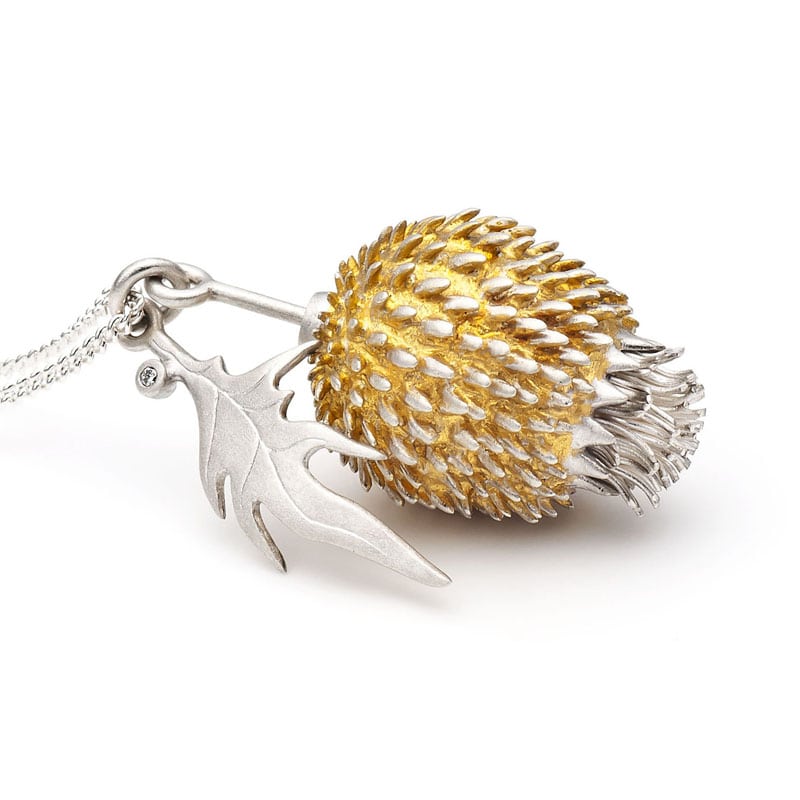
Figure 14 - – Walker, V. Thistle Locket.
 Kinetic Pod Pendant, Sterling Silver,
 18ct Gold and diamond. [ONLINE]14


.As a contrast, some of her pieces are decorated with small shiny stones or pearls that allow her pieces to appear more delicate and precious (Walker, n.d.). Although Walker’s jewellery is contemporary in style, because of the small scale of her designs, they become easily wearable as intimate keepsake pieces (Walker, n.d.).

Below are process pictures to show how her kinetic flowers are assembled:


Figure 15 – Walker, V.,(2018) Victoria Walker Jewellery, 
Frame: 00:10. [ONLINE]15


Figure 16– Walker, V.,(2018) Victoria Walker 
Jewellery, Frame: 00:12. [ONLINE]16


Wednesday, 31 July 2019

Victoria Walker- Metaphor and Movement

Walkers pieces have a precious quality to them, not just because they are made with precious metals but because they have create a sense of sentimentality when the beauty, that is kept hidden inside, is suddenly and surprisingly  revealed to an unsuspecting eye. Walker creates "the idea that sometimes the most precious and treasured elements are hidden beneath the surface. " creating a beautiful metaphor that describes the human soul. 

Victoria walker motifs and Techniques

Walker's kinetic lockets are hand made using the techniques of piercing, domeing, drilling and soldering to create almost lifelike realisticly appearing pieces such as her thistle pendants, where each spike on the surface of the pod is soldered on by hand. Walker also uses various metals to recreate the different colours and hues found in nature, including silver, copper and gold and they are buffed and sanded to have a rough, non shiny finish to resemble the plant of inspiration. As a contrast,  some of her pieces are decorated with small shiny stones or pearls that allow her pieces to be more precious. 
Thistle Pendant Victoria Walker, Sterling Silver Gold

Victoria walker Jewellery Style

Walker's jewellery consists of small locket like  jewellery pieces that open and close with touch or with the movement of the body. Walker creates her jewellery to resemble the opening and closing of flowers and seed pods such as roses, thistles, daisies, sunflowers and the lotus flower.   The petals of the flowers are made out of thin domed pieces of metal that are connected to a base with small jump rings to create tiny hinge like systems that are able to move up and down. These hinge like systems of petals are surrounded by a moving shaft that, when moved down, allow the petals to tilt down to reveal a beautiful metal flower, when the shaft moves up, the petals are then forced up into the shaft to resemble a seed pod or bud. 


Tuesday, 2 October 2018

Movement chapter 2


Movement Chapter 2

Jaqueline Ryan

Jaqueline Ryan creates contemporary jewellery that is inspired by the movement that is found in nature. She uses colours, forms, textures and shapes found in her natural surroundings to create very intricate, organic, abstract pieces in gold and silver and that are coloured with vitreous enamel. Her work consists of multitudes of simple, free hanging elements that are arranged in an order and attached to the main piece in a way to create mesmerising and almost natural movement when the jewellery is worn. I want to develop a similar technique to what she uses to make her jewellery move for the jewellery that I make.

Jaqueline Ryan Kinetic necklace, 18ct gold and vitreous enamel

Jaqueline Ryan Kinetic Brooch, 18ct Gold and vitreous enamel


Victoria Walker
Victoria walker, a jeweller from Cornwall, creates Kinetic jewellery pieces inspired by flowers and seedpods growing in her environment. She makes beautiful flower pendants, earrings and rings out of sterling silver and gold and even though she uses traditional metals for her work, her style of work is organic as she mimics the forms and shapes of flowers in a realistic way, that specific type of flowers can be recognized. Many of her jewellery pieces are made to look, and move, like small scaled-down versions of the plants that she uses for her inspiration.


Peony Pendant by Victoria Walker

Peony Flower

Thistle Pendant by Victoria Walker
Thistle

Movement Chapter 1


Movement 1

It is very difficult to imagine the natural world without movement. Leaves and flower petals blowing in the wind, butterfly wings flapping and the rising and setting of the sun are all examples of actual movement found in nature. Other forms of movement are more subtle such as the changing of the seasons, the growth of plants and animals and their death and decay. Movement can be seen in nature in many instances, not just in its physical form but also in its more metaphorical form when observing natural processes. When looking closely at nature, you see a metaphoric connection with growth and movement as you observe the processes of life and the transition from birth to death.

Many jewellers incorporate movement into their jewellery as the element of movement can express a certain metaphor or ideal that the jewellery artist wants to get across to their audience. It can also be used to make jewellery objects more visually interesting when viewed. Looking at movement or kinetic jewellery, movement or the appearance of movement can be created in many different ways. Some artists create instrument like or mechanical jewellery that move with the aid of a power source and motor. Others create jewellery objects that are made up of parts that are connected with small hinge systems that allow a more subtle form of movement to occur when the wearer moves his or her body. A more virtual form of movement can be created on a completely static object through the use of materials that reflect light or with the use of lines that create the illusion of movement.


Daisy Pendant by Victoria Walker. An example of kinetic jewellery